The real comparison
We are not a new party.We are building a new system.
You trusted them. You stood in line and voted, with hope. And every time the same thing came back: the same broken road, the same excuses, the same silence. It was never your fault. You wanted what was right, but the only choice was the less-bad. That is why people say, "there is no alternative." This page is for you. We are not one more name in the same old game. We are building a system, so you never have to choose the less-bad again.
If you have ever quietly thought to yourself:
- My vote is just a number, not a voice.
- Where do I even take a complaint, who listens.
- They all seem the same, who do I even pick.
- What will change if I act alone.
Then stop here. If even one of those rings true, this movement is for you. You are not alone. And your being here matters.
First, understand this
Why does every hope end the same way?
Think back. Before the election they came to your door, hands folded, full of promises. You thought, maybe this time. Then five years of waiting, on the same broken road, the same dry tap, the same complaint no one answered. It is not that the wrong person wins every time. It is that you keep changing the player, not the game. The face changes, a new name takes the chair, but the machine underneath stays the same. And one machine always produces the same thing.
We compared them
Where the money comes from
Who picks the candidate
The manifesto after the vote
When you get a hisaab
Different names, symbols, slogans. And the exact same answers.
And so
A new party running on old rules just repeats the same story. So we are not asking you to trust one more face. We are building rules that make any face answerable to you. Those rules are below, in the open.
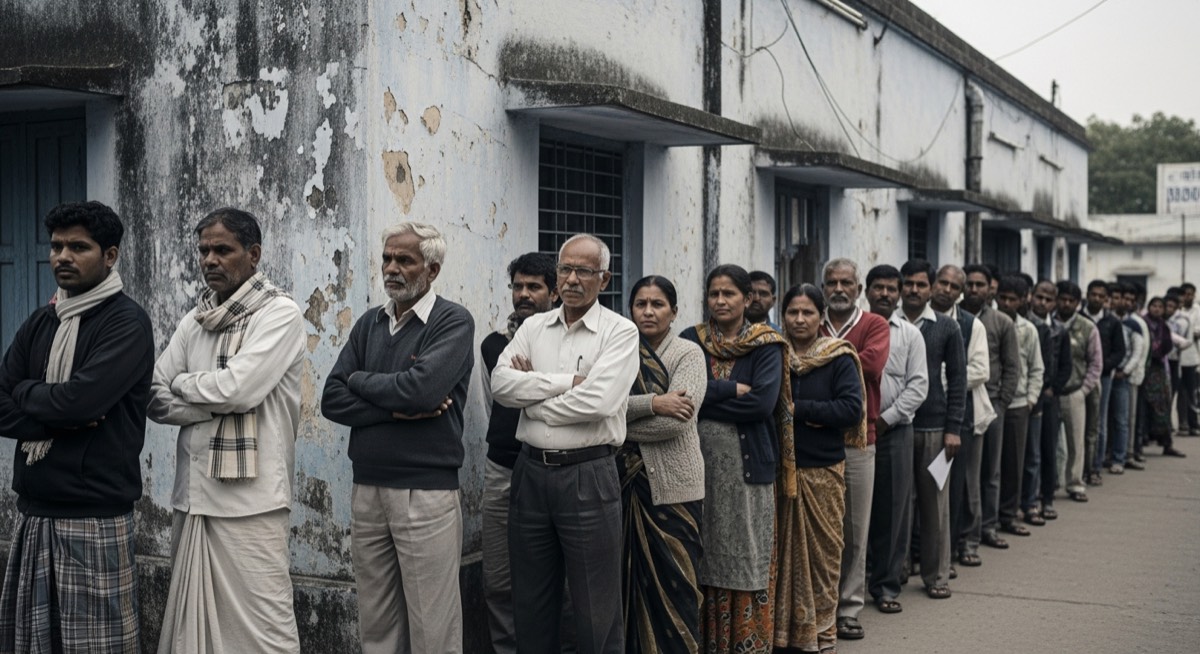
The India you wake up in.
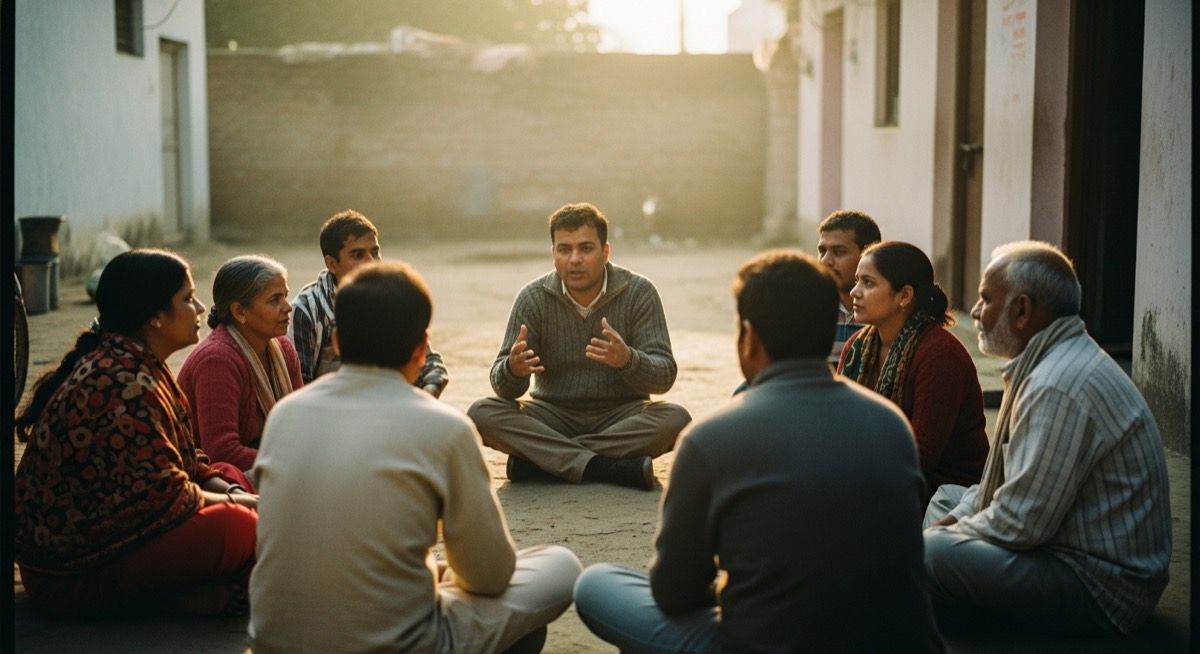
The India you can build.
The difference isn't the faces. It's the system: one keeps you standing in line, the other sits you at the table where the decisions are made.
What you feel directly
Four things, under two systems
The same wounds that machine produces, undone one by one.
Your money
Anonymous + corporate + electoral bonds. Whose money, influencing whom, stays hidden.
Anyone can give, no cap. But every donor is on the public ledger: name, amount, city. No foreign / anonymous / cash, ever.
Whoever's money it is, their name is out in the open. You can see who is being funded by whom.
Your voice
You are a follower. Repeat slogans, show up at rallies, vote. Zero voice in decisions.
You are a decision-maker. Candidate, priorities, policy: a vote on each. Vote weight = 1 for every member, including Member #1.
For the first time, you are not just a number, you are part of the decision. And your vote weighs exactly as much as the founder's.
Your data
Phone, address, voter ID, caste, religion. All collected. Often sold to third-parties.
Only name, phone, ward. Aadhaar / caste / religion: never. Shared with politicians: never. Locked at the code level.
Your identity is not a vote-bank. It is locked in code, not left to anyone's good intentions.
Your hisaab
Once every 5 years, right before the next election. And only verbal.
4 milestones: 100-day, 6-month, annual, 5-year. Plus funding and progress updates every 90 days, on the public record.
The wait is not five years. The first hisaab is in a hundred days, and it will be in your hands.
The old system
Once in 5 years
Only just before the next election, and only verbal.
The new system
Plus funding and progress updates every 90 days, on the public record.
The full receipts
All 12 rules, in one place
The four above are what you feel most. Below is every rule, so you can check for yourself. On the left, politics as it works today. On the right, the rules we bind on ourselves.
Your money · your voice · your data
What touches you directly
Funding source
The old systemAnonymous + corporate + electoral bonds. Source hidden.
The new systemAnyone can give: person or company, no cap. But every donor is on the public ledger (name, amount, city). No foreign / anonymous / cash, ever.
Funding accounts
The old systemFiled yearly with ECI, not with citizens.
The new systemPublic ledger PDF every 90 days. Anonymized donor list live on /funding. Independent CA rotated yearly.
Member's role
The old systemFollower. Repeat slogans, show up at rallies, vote. Zero voice in decisions.
The new systemDecision-maker. Vote in candidate selection, set ward priorities, question reps at Naagrik Sabha, vote on party-wide policy, and (as we grow) elect an ethics committee. Vote weight = 1 for every member, including Member #1.
Member data
The old systemPhone, address, voter ID, caste, religion. All collected. Often sold to third-parties.
The new systemOnly name, phone, ward. Aadhaar / caste / religion: never. Shared with politicians: never. Locked at the code level.
Accountability: who answers, to whom, when
Who owes a hisaab after the promise
Candidate selection
The old systemHigh-command hands down the list. Members merely "approve."
The new system6-step public process: application → dossier → objection window → debate → member secret ballot → Vikas Contract.
Manifesto
The old systemReleased before the election. Forgotten after the election.
The new systemNot a manifesto, a Vikas Contract. 6 specific commitments. Publicly signed before the election. Then a public hisaab at 4 milestones.
When do they give a hisaab?
The old systemOnce every 5 years, just before the next election.
The new system4 milestones: First 100-Day Action Report, 6-Month Naagrik Review, Annual Vikas Report Card, 5-Year Final Vikas Hisaab. Plus funding + progress updates every 90 days.
Defection (switching parties)
The old systemWelcomed. A new candidate just arrived.
The new systemWe can't void a defector's seat, and won't pretend we can; only the Speaker can, under the anti-defection law. What we will do: expel them from the party and publish, to the rupee, what we spent backing them.
The transparency machinery
What guarantees everything above
Naagrik Sabha (local meeting)
The old systemRarely held. Sometimes for a photo-op.
The new systemMonthly by default. Every 15 days during elections. Minutes public within 48 hours. Attendance + photos + decisions all recorded.
Internal voting
The old systemClosed-room. "Consensus" is fake. Often pre-decided.
The new systemSecret ballot. Result + breakdown + abstain count public. Code will be open-sourced.
Constitution (samvidhan)
The old systemExists, but hard to read. Changed by president or parliamentary board.
The new systemThe three binding promises are public on /pramanikta. The full constitution will be drafted with members. Amendments require a two-thirds member vote. Office bearers cannot change it unilaterally.
Code and data
The old systemClosed. Vendor proprietary. Not auditable.
The new systemOpen-source, publicly auditable code (coming). Public database schema. When the repo is public, signed commits and a deploy log.
Look closely
The difference isn't degree. It's kind.
Every party says "we are different." But they differ in promises. We differ in structure. Three differences that make this a difference in kind:
The old system
You, only a follower
Orders flow from the top down.
The new system
Power rises from you, and stays bound.
- 01
Trust vs check
They ask for your trust.
We ask to be checked.
- 02
Promise vs structure
They differ in promises.
We differ in structure.
- 03
Luck vs design
There, a good leader is luck.
Here, a bound leader is by design.
The biggest difference
You might quietly wonder: just another one-man party?
Here, no one is above the rules. Not even the person who started it.
In every old party, there is one name that sits above the rules. Here it is the exact opposite. The person who started this is held to the strictest rules of all, in the constitution, in writing, for good:
One vote, equal to yours.
The founder's vote counts as 1, exactly like yours. No veto.
No payday.
If the party ever shuts down, the founder gets ₹0. Every last rupee goes to public causes. This is not a place to make money.
No solo changes.
Not even the founder can change it alone. Not without a two-thirds member vote.
Here, power is built to be shared, not hoarded.
Read these binding promises yourself →Here, goodness does not rest on one person staying good. It rests on the rules.
You are not picking the least-worst. You are building the alternative.
Every claim about the old system comes from public records: election affidavits, ECI filings, court cases, RTI replies. Every claim about us is live and public on /pramanikta, /live and /funding. This system is still being built. Today we are few, and that is exactly your chance: be the one who was there at the start. Every big change began with a single name. The next one can be yours.
Twenty years from now, someone will ask: "when all this began, where were you?" Your answer starts today, right here, for the India our children deserve.
To be clear: "the old system" is not any one party. It's the common pattern seen across almost every party, whatever its symbol or ideology. We never name a specific party or leader.
Also see: check it all yourself