25 Years · The Same Questions
Governments changed. Parties changed. Chief ministers changed. These questions didn't.
Over the last 25 years India has seen many governments: at the Centre, and in the states. Every major party got its turn. Chief ministers changed, prime ministers changed, manifestos changed. And yet some questions stayed exactly the same. Why? Because the problem isn't any one party. The problem is the mechanism. No leader, of any party, was ever bound to a public, year-by-year, tracked reckoning. This party is not against any party. It is against the system in which a promise is forgotten the day after the election.
This page does not point a finger at any party, leader, or government. Each point below is a broad, publicly acknowledged problem that persisted under governments of different parties. Our quarrel is not with a person. It is with a system.
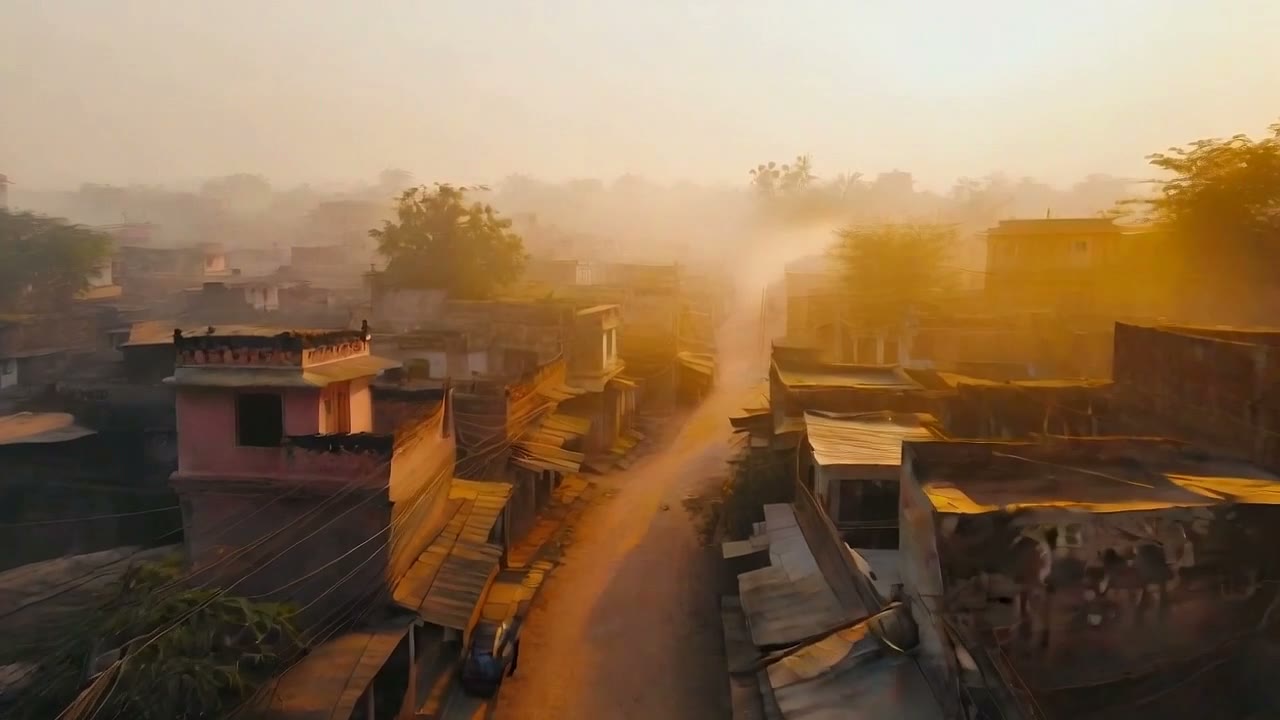
25 years · a whole life
These questions don't just sit on paper. They've swallowed a whole generation.
The child who was in Class 1 when this question was first asked is 30 today, still asking it. The mother who waited for that lane to be paved grew old before it was. 25 years isn't a statistic. It's someone's entire youth, someone's whole childhood, spent waiting.
The real question
The fault isn't a party. The fault is the mechanism.
When an issue survives 25 years, across many different governments, the problem isn't one team. The problem is that no team was ever made to give a public, measured, year-by-year account. Changing the team changed nothing. The mechanism has to change.
The accountability gap · real data
This isn't just our opinion. It's in the data.
You know the issues: jobs, prices, healthcare. But why have they stuck for 25 years? The real root: after the vote, there is no routine way to make a leader answer. Here is the proof: every figure real and sourced. No party named. The fault is the system.
All from non-partisan institutions: PRS, ADR, Lokniti-CSDS, CAG, SNS. No party named; the fault is the system. See a figure that's off? Flag it on /pramanikta.
India's ledger · real data
Both are true. Much changed. Much is still owed.Open to see the ledger: what changed, what's still owed (cited).
Both are true. India lifted hundreds of millions out of poverty. Own it. But good jobs, affordable healthcare, and clean governance are still owed. This isn't rage. It's an unfinished promise. Every number here is real and sourced.
- ~170 million lifted from extreme povertyExtreme poverty fell 16.2% → 2.3% (2011-2023).· World Bank ↗
- Multidimensional poverty 29% → 11%~248 million escaped deprivation in nutrition, schooling, sanitation.· NITI Aayog ↗
- UPI: 172 billion+ transactions (2024)Even a vegetable cart takes digital payment. Money moves direct.· NPCI / IBEF ↗
- Electricity to ~99.6% of peopleFrom ~50% in 1993 to nearly every home today.· Data For India ↗
- Graduate joblessness is 3-4× the averageThe more you study, the longer the wait. Jobs are voters' #1 worry.· ILO / PLFS ↗
- Pay rose, but real wages stalled, 2012-22Inflation ate the raise. Buying power barely moved. Salaried workers' real wages stagnated or fell.· ILO India Employment Report 2024 ↗
- ~43% of health spend is out-of-pocketOne illness can wipe out a family's savings.· NHA 2022-23 ↗
- The top 1% holds ~40% of wealthHighest since independence. The gains pooled at the top.· World Inequality Lab ↗
- 39% paid a bribe, highest in AsiaAnd 55% feel corruption rose over five years.· Transparency Intl / CSDS ↗
- Only 23% of Class 3 kids can read a Class 2 textThe school that should be the ladder out is leaking.· ASER 2024 ↗
Every figure is from a public source. See something off? Flag it on /pramanikta. We'll fix it.
The same questions, alive for 25 years
Every one of these questions has a face. The girl who left school to fetch water. The father still waiting his turn outside the hospital. Below: 12 questions, each alive for 25 years, and next to each, the path Bharat Banao takes.
- 2000 → 2025
The jobs promise, every time
The pattern:In every election 'jobs' was the biggest promise, made by every major party. The economy grew, yet youth unemployment is still young India's number-one worry.
In Bharat Banao:In the Vikas Contract, every candidate's 1-year and 5-year jobs/skilling target is public and tracked.
- 2000 → 2025
Farm income and farm debt
The pattern:Many governments, many loan waivers, many MSP announcements. And yet farm income and farm debt have stayed open questions for decades.
In Bharat Banao:Every rural area's Vikas Plan is built on local farmers' priorities, with a public Report Card each year.
- Mumbai 2005 · Chennai 2015 · Bengaluru 2022 · Delhi 2023
Every monsoon, the same drowning cities
The pattern:Mumbai, Chennai, Bengaluru, Delhi: every time an 'inquiry', every time 'it'll be fixed next year'. Governments and parties changed; the city's drainage didn't.
In Bharat Banao:Drainage becomes a tracked target in the ward Vikas Plan, reviewed in the Naagrik Sabha before every monsoon.
- 2000 → 2025
The right to breathe
The pattern:Every winter North India's air turns 'severe'. The Centre changed, state governments changed, court orders came. The AQI didn't.
In Bharat Banao:Pollution becomes a standardized Report Card metric. Every elected rep must publish their area's data each year.
- Chennai 2019 · Bengaluru 2024
Water: close to 'Day Zero'
The pattern:Chennai came near 'Day Zero' in 2019. Bengaluru leaned on tankers in 2024. Cities changed, governments changed. The groundwater kept falling.
In Bharat Banao:Water is a core indicator in every Vikas Plan. The local Circle and Sabha track it every quarter.
- 2021 (COVID) · aur usse pehle bhi
When the hospital beds ran out
The pattern:In 2021 everyone saw the oxygen and bed shortage. It wasn't one government's mistake. It was the result of decades of under-investment in public health, across governments of every party.
In Bharat Banao:Public health is a fixed Report Card metric (one of 9 standardized indicators), every year, every area.
- 2005 → 2025 (ASER har saal)
Schooling, but how much learning?
The pattern:Reports like ASER show, year after year, that many Class-5 children can't read Class-2 text. Enrollment rose, but the learning gap persisted for decades. Governments changed, the gap didn't.
In Bharat Banao:School quality + teacher vacancies are tracked in every area's Vikas Plan, reviewed publicly in the Sabha.
- 2000 → 2025
A new 'scam' every few years
The pattern:Under different governments, at different levels, a new scam surfaced every few years. The one thing in common: the money was outside public scrutiny.
In Bharat Banao:Every rupee on a public ledger. Every candidate's funding disclosed every 90 days. No room left to hide money.
- 2020 lockdown · aur har saal
Far from home, for work
The pattern:In the 2020 lockdown, lakhs of workers walked home. That wasn't about one decision. It was decades of uneven development that left some regions behind.
In Bharat Banao:Every area gets its own Vikas Plan, so livelihoods are built close to home, not only in a few chosen cities.
- Har saal, har sheher
The same potholes, the same broken drain
The pattern:Every monsoon, every city: the same potholes. The councillor changed, the contractor changed, the party changed. The road didn't. No one had a structured route to demand a reckoning.
In Bharat Banao:Citizen raises → verify → Sabha → action → tracked. Every local issue runs through a public lifecycle.
- 2000 → 2025
Justice: a wait of years
The pattern:Crores of cases have been pending in courts for decades. This isn't one government's issue. It's a structural under-capacity no government made a priority.
In Bharat Banao:BBP treats this as a public-accountability issue too. Every Sabha can track local justice access (legal aid, FIRs, paperwork).
- Har chunaav, 25 saal
The manifesto: gone after the election
The pattern:This is the biggest issue, because it keeps all the others alive. Every party brings a beautiful manifesto. After the election no one tracks it seriously. That single gap is what kept every other question alive for 25 years.
In Bharat Banao:The Vikas Contract = a manifesto that gets tracked. Specific, public, signed, and a Report Card at 100 days / 6 months / year. This is the heart of the whole cycle.
After 25 years
Next time, don't just change the government. Change the way you demand a reckoning.
The answer · one loop
Not a new leader. A new method.
- 1ListenListen
Citizens raise the issues of their area.
- 2ConnectConnect
People form a Circle in their mohalla.
- 3ChooseChoose
Members choose their own candidate.
- 4PromisePromise
The candidate signs a public Vikas Contract.
- 5ActAct
Real work begins on the ground.
- 6AccountAccount
Every 100 days / 6 months / year: a public report card.
Year 26 can be different.
Work you can find here. Care that doesn't ruin you. A road that gets built, a doctor who's there. That 26th year, we can build it. But it won't come on its own.
25 years have already gone. Every year you don't demand the reckoning, it slips by again. A new mechanism starts with one member. Today that can be you.
Our manifesto, in two parts